

Key Takeaways
A member retention strategy is a deliberate plan to keep current members renewing by delivering clear value, reducing renewal friction, and responding to engagement signals throughout the year. AI helps only when it supports specific staff-led tasks, not when it tries to replace human judgment about relationships.
- AI can help small association teams prioritize personalized outreach, spot participation gaps in event attendance and committee work, prepare renewal conversations with clear talking points, and make member directories more useful between events.
- Effective member retention requires proactive engagement strategies. Technology centralizes member data for better engagement tracking, but staff still own every decision about what to say and when to act.
- Member retention strategies reduce acquisition costs and stabilize recurring revenue, making retention efforts more cost-effective than relying solely on new member acquisition.
- AI does not replace staff judgment. It assists with drafting, summarizing, and pattern-spotting so teams can focus on high-value conversations and personal outreach.
- Merit Layer serves as a Member Intelligence partner for associations that want to turn scattered member information into clearer action across recruitment, engagement, renewal, and advocacy.

Member Retention Strategy In 2026: Start With Real Workflows, Not Hype
Most associations in the United States today run on small teams serving hundreds or thousands of member-based organizations. Member data lives across association management software, event registration tools, email platforms, and spreadsheets that different staff members maintain independently. That fragmentation makes it difficult to answer straightforward questions: which member companies are actively participating, which prospective members deserve follow-up, and which existing members have gone quiet?
A member retention strategy is simply a plan to keep current members (usually organizations in a company-based model) renewing year after year. It is an ongoing process that delivers ongoing value, simplifies the membership renewal process, and responds quickly when member churn signals appear. Increasing member retention maximizes lifetime value, and it costs far less than constantly replacing departing organizations with new members.
AI is useful in this context only when it supports an existing member workflow, such as prospect follow-up, renewal preparation, or participation-gap outreach. It must stay inside guardrails set by association staff. This article focuses on practical use cases where AI can realistically help boost member retention for small association teams in the United States, without hype or abstract theory.
Why Member Retention Still Matters More Than Ever
Trade associations, professional associations, chambers of commerce, and chapters rely on predictable dues revenue and stable participation to fund advocacy, education, and community programs. High retention rates provide a stable revenue base for organizations that need to plan budgets, staff events, and coordinate legislative efforts across states.
Here is why retention rates deserve more attention than many associations give them:
- Most associations aim for a retention rate of 80% or higher. Associations with 80% renewal rates tend to believe in their value proposition and communicate it consistently.
- Member engagement is the strongest predictor of retention. Engaged members are significantly more likely to renew because engagement signals they see real value in their membership.
- Networking opportunities are a major driver for member retention. A sense of community boosts member loyalty, and members who feel connected are less likely to leave.
- Community engagement significantly increases member retention rates. Regular events foster community and boost engagement, and meaningful connections among members deepen attachment to the organization.
- Loyal members can act as brand champions through word-of-mouth promotion, generating referrals that lower your cost of acquiring new members.
Moving your membership retention rate from 82 percent to 86 percent in a single fiscal year can have more long-term impact than adding an equivalent number of new members. That improvement compounds: fewer lapsed members to replace, stronger advocacy credibility, and a more engaged member base that actively participates in programs.
Member retention matters because it connects directly to member experience, member benefits, and member engagement. These are ongoing responsibilities across the full membership journey, not a last-minute push in the 60 days before renewal.
How AI Actually Helps Association Teams Today
Many conversations about AI for associations feel abstract. Let’s focus instead on very specific workflows where AI support is realistic right now.
Core task types where AI can help without making final decisions:
- Drafting and refining: First drafts of follow-up emails, renewal reminder language, and internal task notes. Automated reporting saves volunteers significant administrative time on routine communication strategies.
- Summarizing engagement histories: Turning months of event attendance, committee work, and benefit usage into concise renewal talking points that keep members informed about the value they have received.
- Spotting participation patterns: Engagement scoring predicts renewal probability and identifies at-risk members. Engagement scores can help identify when members need outreach, and tracking engagement helps identify members at risk of lapsing before a membership lapse occurs.
Research consistently shows that 81% of marketers believe customer experience drives retention. For association professionals, that translates directly: the quality of how you communicate, follow up, and demonstrate value shapes whether members feel their membership fee is worthwhile.
AI becomes more valuable when the association already has reasonably clean member data in systems such as an AMS plus a Member Intelligence layer like Merit Layer, rather than in disconnected spreadsheets. View AI as staff assists that speed up work, not as an autonomous system that understands member intentions or guarantees renewals.
Use Case 1: AI-Supported Prospect Follow-Up As Part Of Member Retention Strategy
Picture a membership director in 2026 managing a list of 150 prospective member companies who attended a regional event in March. Each company may have sent two or three contacts to different sessions. Without a system, follow-up depends on memory, sticky notes, and good intentions.
A Member Intelligence tool like Merit Layer Grow can centralize these prospects, assign ownership to specific staff, track stages from initial interest through conversion, and record notes from calls and emails. AI can help by summarizing each prospect’s history, drafting a follow-up email tailored to their industry and past event attendance, and flagging prospects that have gone 30 or 60 days without contact.
This prospect work connects directly to retention. Effective onboarding can significantly reduce churn because the first 30 days of membership are critical for retention. A structured onboarding process enhances member engagement from day one, and members who feel welcomed during onboarding are more likely to renew. Personalized onboarding experiences can improve member satisfaction by setting clear member expectations about what the association offers.
Recruiting well-aligned organizations and setting expectations early makes long-term retention easier because those organizations see relevant value from their first year, rather than discovering it too late.
Use Case 2: Spotting Participation Gaps Before Members Go Quiet
Consider a long-term member company that sends people to annual conferences but has stopped attending virtual events, sponsoring programs, or participating in committees since mid-2025. On paper, they look like loyal members. In practice, their engagement has narrowed to a single touchpoint.
Merit Layer Engage can consolidate event attendance, sponsorships, committee service, and other activities into an engagement profile for each company, making narrow participation and declining activity visible to staff. Members who actively participate across multiple programs are significantly more likely to renew, so spotting a decline early matters.
AI helps staff by turning raw participation data into a short narrative summary, such as: “strong conference participation, no committee work since 2023, no use of training discounts in 2025.” High member engagement drives loyalty and satisfaction, so staff needs to know when engagement drops.
These summaries support targeted outreach that mentions specific member benefits and educational offerings rather than generic “we miss you” emails that many members easily ignore. Personalized communication enhances member engagement, and personalized outreach shows members you understand their needs. Regular communication keeps your organization top of mind, and members are more likely to stay when they feel heard and valued.
The goal is to increase member engagement by making outreach specific and relevant, keeping members engaged, and connecting with existing members before they drift away.
Use Case 3: Preparing Better Renewal Conversations With Clear Member Value
Imagine your membership team preparing for renewal conversations in Q4 of 2026 with 40 key member companies whose dues represent a large share of the association’s budget. Without preparation, those conversations default to “we hope you’ll renew” instead of “here’s what your membership delivered this year.”
A Member Intelligence platform can aggregate each company’s activity: event tickets used, tangible benefits accessed, directory visibility, advocacy involvement, and sponsorship exposure. AI can draft a concise, plain-language renewal brief for staff showing the member’s main benefits received, top engagement areas, and potential gaps where the association could offer more support.
Regular communication about member benefits strengthens perceptions of value. Simplifying the renewal process can increase retention rates, and automated renewal reminders help prevent member drop-off. Unified AMS platforms streamline renewals and improve member experience when paired with the kind of member intelligence that makes each conversation specific.
Staff must review and adjust these AI drafts. Engagement scores are not renewal guarantees, and the goal is better renewal conversations backed by specific examples, not vague value claims. When members understand exactly what they received, they can make informed decisions about continuing. Exploring how to have better renewal conversations through AI-assisted preparation is a practical next step for any team.
Use Case 4: Member Directories And Connections Between Events
In many associations, the member directory is underused except around the annual meeting, even though members say networking and visibility are top membership benefits. Between in-person events, the directory sits idle while members wonder who else belongs and what other members offer.
Merit Layer Connect can enrich company profiles with capabilities, locations, and key contacts, then make those profiles easier for members to search and browse year-round. AI can support a member directory check by helping staff identify incomplete or outdated profiles, summarize what a company offers in a clear description, and suggest related members they might want to meet.
Recognizing loyalty can strengthen member relationships, and associations should recognize member achievements to build loyalty. Spotlighting members in newsletters boosts their credibility, while personalized notes of appreciation can create lasting impressions. Celebrating member milestones strengthens community connections and helps members feel connected to the broader network.
Featured directory placements or advertising create non-dues revenue opportunities (though they are opportunities, not sales guarantees). Stronger directory visibility reinforces member experience between events, making membership feel like more than just a line item. Understanding how directory software and follow-up connect directly to retention conversations is worth examining.
When you invite members to update their profiles and remind members about directory features, you create consistent engagement that extends the value of membership beyond event tickets and annual conferences.
Use Case 5: Geographic Outreach And Advocacy Planning
Advocacy is a core reason many member organizations join U.S. trade and professional associations, especially when regulations and legislation shift quickly at state and federal levels. Members expect their association to coordinate effective responses, and that coordination requires knowing where your members are.
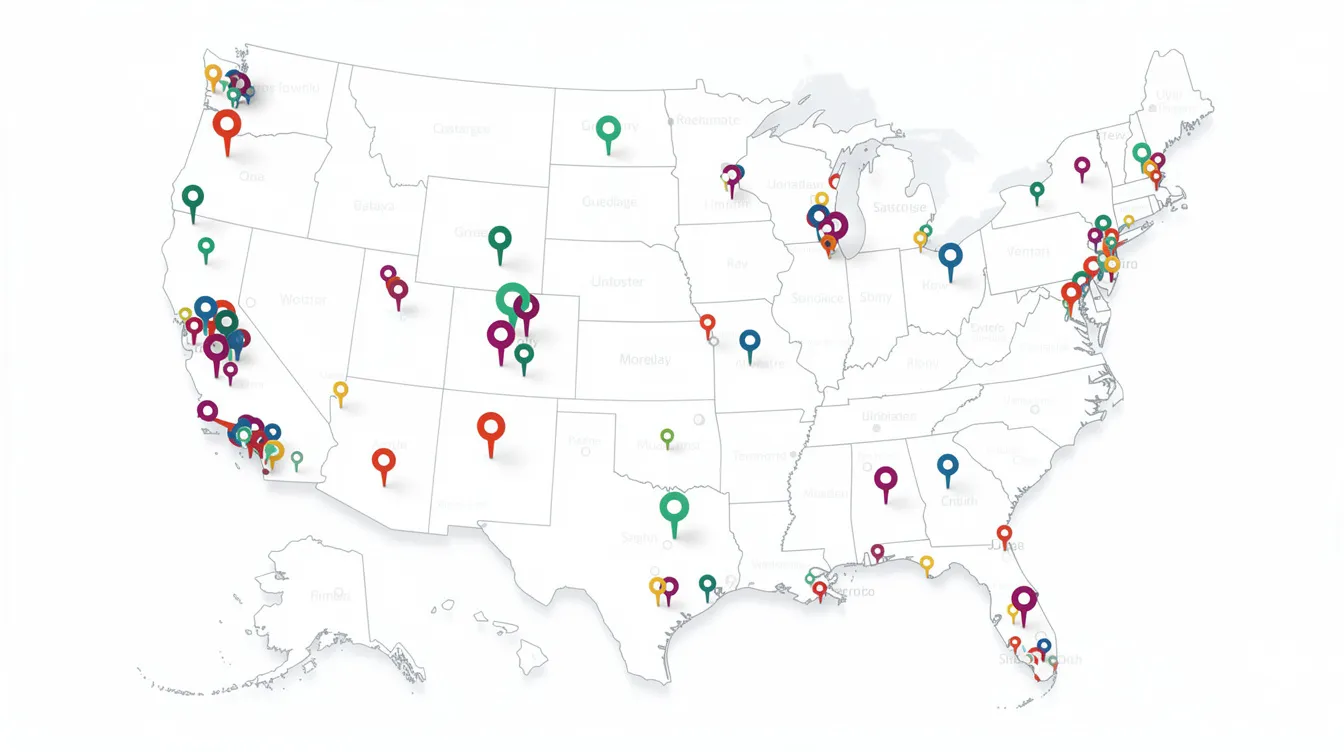
Merit Layer Advocate can connect member locations and relationships with legislative districts, so staff can see where they have member voices ready for outreach on an issue. AI can assist with geographic planning by summarizing which regions have high concentrations of member companies, which districts lack representation, and which contacts have previously participated in advocacy campaigns.
AI can help draft outreach lists and opening language for advocacy emails, but staff must control final segmentation, message tone, and timing because these communications affect reputation and member trust.
Continuous feedback loops and member feedback help organizations understand member needs, including their advocacy priorities. Associations that want to reduce member churn should also conduct exit interviews to identify reasons for churn and uncover patterns in membership lapse. Members who see their association coordinating effective advocacy that reflects their interests develop a stronger emotional connection and are more likely to renew.
Guardrails: Using AI Responsibly In Member Workflows
Association leaders rightly have concerns about privacy, data security, and reputational risk when using AI to support member engagement and retention efforts.
Clear guardrails to follow:
- Use paid, governance-aware tools rather than public consumer AI for sensitive data. Never feed confidential financial details, recurring billing information, salary data, or private complaints into generic AI tools.
- Keep human review on every message that reaches a member or prospective member. AI drafts are starting points, not finished products.
- Data quality matters: AI output is only as useful as the data and rules provided. Incomplete records, mislabeled contacts, or missing event attendance details will limit the value of pattern-spotting.
- Document an internal AI-use guideline covering acceptable use cases, data handling expectations, and review processes so staff understand when they may use AI and what they must never delegate.
No member should ever feel like just a number in an automated system. AI should free staff for the personal outreach and relationship-building that makes members feel valued.
Choosing Your First AI Workflow As A Small Association Team
Small staff associations cannot overhaul everything at once. Select a single, high-impact workflow to test rather than trying to automate every part of membership retention strategies simultaneously.
Selection criteria for your first workflow:
- Pick a repetitive task tied directly to member retention, such as participation-gap outreach or renewal-prep summaries
- Ensure a clear data source exists (your AMS, event records, or a Member Intelligence layer)
- Assign an internal owner who can review AI drafts and measure results
Starting options that work well:
- Have AI summarize activity for your top at-risk members based on engagement patterns
- Draft a first pass of renewal reminder language personalized by member segment
- Support follow-up with lapsed members by drafting empathetic check-in messages to re-engage them
Measure success with specific metrics: did more at-risk companies respond to outreach? Did staff save measurable time preparing renewal conversations? Did your membership retention rate improve by even one or two points? Track outcomes rather than relying on vague impressions.
When your team is ready to move from scattered data to a deliberate member intelligence approach for renewal, a platform like Merit Layer brings Connect, Grow, Engage, and Advocate together in one view, so association professionals can assess member directory software and workflows holistically.
Putting It Together: AI, Member Intelligence, And Long-Term Retention
An effective member retention strategy in 2026 uses member intelligence to focus staff effort and AI to make key workflows faster and clearer. It does not hand decisions to software. AI-supported workflows in recruitment, engagement, renewal preparation, member directories, and advocacy help retain members by making value more visible and outreach more relevant.
Review your current processes for tracking member benefits, event attendance, and community engagement. Decide where better information and light AI assistance would immediately reduce friction or prevent member churn. The industry average for renewal hovers around 80 to 85 percent, and even modest improvements compound into a more engaged member base, steadier budgets, and stronger advocacy.
Merit Layer helps associations turn member information into stronger relationships and more purposeful action. If your association wants to move from scattered information to retention-focused workflows that associations focus on in 2026, explore how a Member Intelligence Suite can support the work your team already does, with clearer priorities and better follow-through.

FAQ: AI And Member Retention For Associations
Below are answers to common questions about this topic.
How is AI different from the automation tools we already use for renewals?
Traditional automation tools send scheduled reminders or apply fixed rules, which helps prevent member drop-off. AI goes further by drafting custom messages, summarizing complex member histories, and spotting patterns such as declining event attendance or narrowing participation, all with human review before anything is sent. Think of automation as the engine and AI as the co-pilot who helps staff decide what to say and who to prioritize.
Can small associations without a dedicated data team realistically use AI?
Yes. Small associations can start with modest, well-defined tasks such as drafting renewal emails or summarizing engagement for five key members. Use your existing membership and event data as the foundation, and expand only after staff feels confident with the workflow. You do not need a data scientist; you need one person willing to review AI output and measure whether it saves time or improves response rates.
What kind of member data should we avoid sending to AI tools?
Avoid highly sensitive data such as credit card numbers, confidential complaints, salary data, or unredacted legal issues. Use AI inside platforms with appropriate data governance standards rather than pasting member records into public consumer tools. Associations handling sensitive data should document which tools are approved and which inputs are off-limits.
How do we explain AI use to our board and members without causing concern?
Frame AI as an assistant that helps staff work through routine tasks faster so they can spend more time on conversations, advocacy, and member service. Emphasize that humans still decide what actions to take and what to say. Most board members and active participants respond well when they hear that AI is helping staff prepare for better conversations rather than replacing them.
Does AI help us win back lapsed members or only retain current members?
AI can support both. When data is available, it can help staff analyze why lapsed members left, support more informed outreach, and draft tailored re-engagement messages. Exit interviews help uncover patterns in membership lapse that AI can reference when similar disengagement patterns appear among current members, allowing staff to intervene earlier and improve member satisfaction before renewal season arrives.


